Discovery Research
Collaborative Research
The Discovery Research division creates opportunities for multidisciplinary collaborations and matches bench scientists with clinical partners to identify avenues for new treatments, biomarkers, and predictive diagnostics for neurodegenerative diseases.
The Discovery Research team brings together neuroscientists and provides seed funding for new initiatives including our clinical partners.
Seed Grants
The Steve Gleason Institute for Neuroscience fuels new research and clinical applications to improve neurodegenerative health. We uphold the exchange of ideas and collaboration among students, fellows, faculty, and scientists.
In keeping with our mission, the Gleason Institute previously awarded the following seed grants for neurodegenerative disease research.
Endocannabinoids Assessment Project
The goal of this collaborative project with Providence St. Luke’s Rehabilitation Medical Center is to identify biomarkers of ALS in cerebral spinal fluid to speed up the diagnosis of the disease, extend the treatment period, and potentially lengthen the survival of individuals with ALS. A new innovative adaptive technology to improve bowel function and continence in individuals with neurodegenerative diseases.
Adaptive Technology Improves Bowel Function
The WSU Spokane Biomedical Engineering and Design team and a physician Clinical Associate Professor in the Elson S. Floyd College of Medicine are collaborating to develop a medical device that helps individuals with spinal cord injury or neurodegenerative diseases impacted by abnormal bowel control. This novel technology will have the potential to improve the quality of life of individuals with spinal cord injury or neurodegenerative disease and their caregivers.
Measuring Neck Strength and Muscle Activity
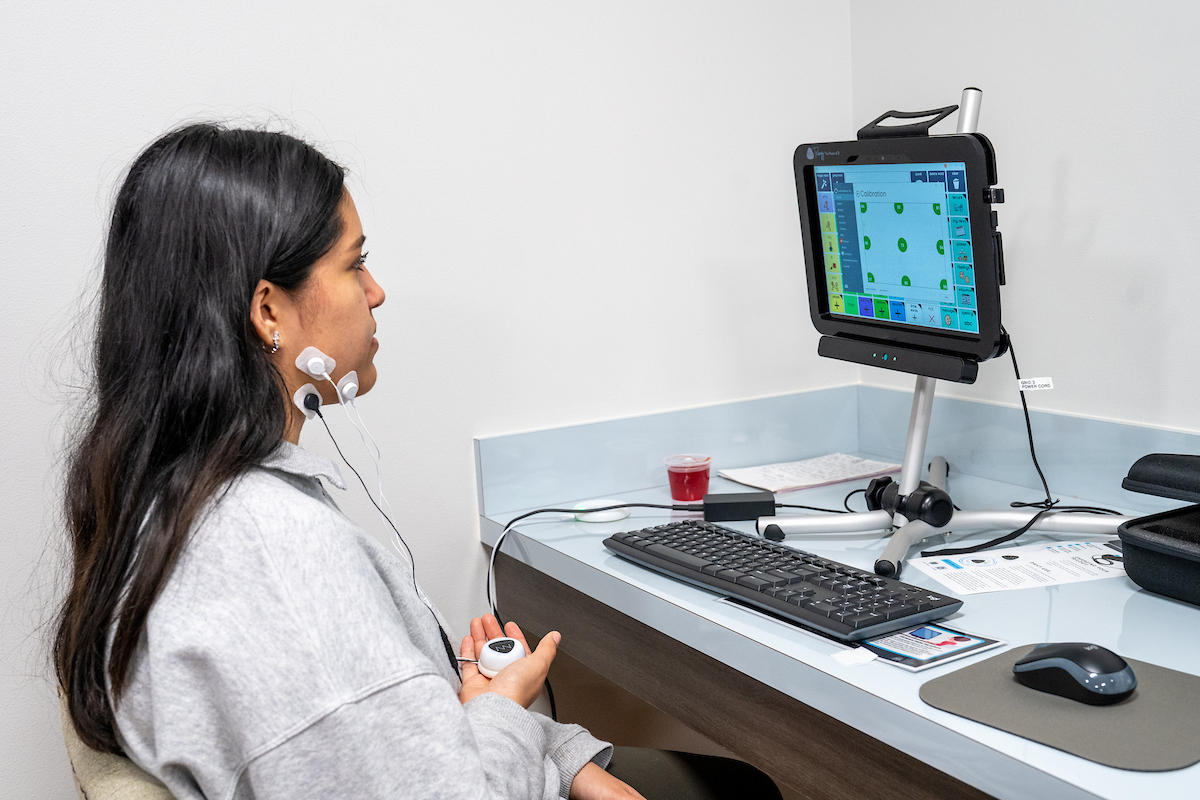
Led by a team of investigators from WSU and Providence St. Luke’s Rehabilitation Medical Center, this study will objectively measure neck strength and muscle activity in people with ALS, an understudied area that will yield new knowledge that could be used to improve assistive technologies such as head-controlled wheelchairs.
Neuroprotective Role of Sleep
This study will test the hypothesis that sleep reverses oxidative stress in the brain through a process that relies on nicotinamide, a form of vitamin B3. A joint effort between researchers in the Colleges of Medicine and Pharmacy and Pharmaceutical Sciences, the study will help determine the feasibility of nicotinamide supplementation to reduce brain oxidative stress and protect against neurodegenerative disease.